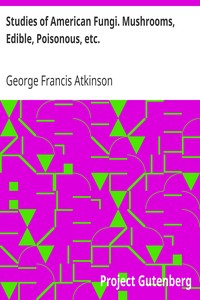
Studies of American Fungi. Mushrooms, Edible, Poisonous, etc. by Atkinson
Let's be clear from the start: this is not a storybook. Published in 1900, Studies of American Fungi is a scientific field guide. But don't let that scare you off. Think of it as a snapshot of a moment in history when American naturalists were urgently cataloging the natural world, driven by both curiosity and the practical need to know what could kill you.
The Story
There's no plot in the traditional sense. The 'story' is Atkinson's journey to document and explain hundreds of mushroom species found across North America. He organizes them by type, provides incredibly detailed descriptions of their caps, gills, stems, and spores, and illustrates them with beautiful, meticulous black-and-white photographs and drawings. The real narrative tension comes from the careful, page-by-page separation of the edible from the poisonous. He explains how to identify a true morel from a false one, a harmless puffball from a young, toxic Amanita. The book is his effort to build a reliable system of knowledge where very little existed for the public, turning fear and mystery into something you could understand and, with caution, interact with.
Why You Should Read It
You should read it for the atmosphere. The prose is old-fashioned but clear, and it carries the enthusiasm of a true explorer. You can feel Atkinson's wonder at the diversity of fungi and his earnest desire to keep people safe. It’s a primary source that drops you right into the mindset of early American mycology. It’s also surprisingly humbling. Our modern apps and color field guides stand on the shoulders of works like this. Seeing the painstaking work required just to tell two mushrooms apart makes you appreciate both the science and the bravery (or hunger!) of early foragers.
Final Verdict
This book is a niche treasure. It's perfect for history buffs, naturalists, modern mushroom foragers who want to understand the roots of their hobby, or anyone who loves old, tactile scientific books. It's not a practical guide for foraging today (please use a modern one!), but as a piece of living history and a testament to foundational science, it's completely absorbing. If you've ever looked at a mushroom and wondered who figured out it was safe to eat, this book gives you a direct line to those pioneers.
This digital edition is based on a public domain text. Use this text in your own projects freely.
Jessica Brown
3 weeks agoI found the author's tone to be very professional yet accessible, the case studies and practical examples provided add immense value. A trustworthy resource that I'll keep in my digital library.
Ashley Martin
3 weeks agoI particularly value the technical accuracy maintained throughout.
Emily Williams
6 months agoAfter spending a few days with this digital edition, the practical checklists included are a great touch for real-world use. Highly recommended for those seeking credible information.
Linda Torres
1 year agoEnjoyed every page.

Christopher Gonzalez
9 months agoLooking at the bibliography alone, the emphasis on ethics and sustainability within the topic is commendable. Top-tier content that deserves more recognition.