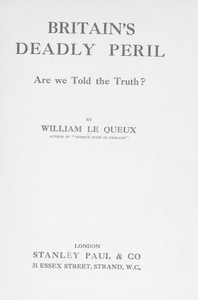
Britain's Deadly Peril: Are We Told the Truth? by William Le Queux
Let's set the scene. It's 1915. The Great War is raging across the Channel, and back home in Britain, people are anxious. Newspapers report from the front, but what's really happening on their own streets? Enter William Le Queux, a bestselling author who had already made a name warning about fictional German invasions. This time, he's not writing a novel.
The Story
Le Queux presents his book as a factual investigation. He argues that Britain is crawling with German spies—waiters, barbers, businessmen—all secretly working to undermine the war effort. He describes networks of agents mapping the coastline, sabotaging factories, and reporting military movements. The real plot isn't about a single villain; it's about a pervasive, invisible threat that the public is unaware of and the authorities, in his view, are failing to stop. The book is a series of accusations, warnings, and alleged evidence designed to shock the reader into action.
Why You Should Read It
Reading this today is a wild experience. You have to remember this was published while the war was still going on. The fear Le Queux channels is palpable and raw. It's less about whether his specific claims were true (many historians consider them exaggerated) and more about understanding the mindset of a nation at war. This book is a primary source for that climate of suspicion. It shows how information—and misinformation—can be weaponized to shape public opinion and stir up patriotism (and paranoia). It’s a blunt, unsubtle, and totally compelling piece of history.
Final Verdict
This book is perfect for history buffs who want to go beyond dry facts and feel the emotional temperature of World War I Britain. It's also great for anyone interested in the early days of spy fever, propaganda, and media-driven panic. Don't read it as a factual record of espionage; read it as a thrilling, alarmist document that helped define an era's fears. It’s a short, provocative, and utterly unique window into a time when the enemy was thought to be hiding behind every corner.
This masterpiece is free from copyright limitations. Access is open to everyone around the world.