J
Jack Reynolds
Guest
- Thread Author
- #1
Sprinkler output, soil type, grass variety, rainfall, and climate all affect how long a lawn needs to be watered. A large lawn does not automatically need longer watering than a small one.
What matters is how quickly your sprinkler applies water and how well your soil absorbs and holds it.
Your grass type also affects how much time your sprinkler needs to run. The same weekly water goal can translate into different watering times depending on your lawn’s conditions.
This blog shows you a simple test to calculate the right sprinkler time for your yard.
You will also learn the best time to water and how to spot over- or under-watering before it damages your grass.
Before you set a timer, you need to know your target number. That target is not random. Grass roots typically reach four to six inches into healthy soil. Watering to that depth trains them to grow deeper rather than stay near the surface. Deeper roots handle dry spells better.
Most lawns need 1 to 1.5 inches of water each week. This total includes any rainfall. Cool-season grasses like Kentucky bluegrass and fescue tend to need water at the higher end of that range. Warm-season grasses like Bermuda, zoysia, and St. Augustine often get by on half an inch to one inch of water.
Soil plays a role too. Sandy soil drains quickly, so it needs shorter, more frequent watering. Clay soil holds water longer but absorbs it slowly. It needs less frequent watering spread over a longer session to avoid runoff. Loamy soil sits in the middle and usually handles a standard deep watering schedule without much adjustment.
Zoning matters here too. Grass and flower beds rarely need the same amount of water. Planning this into your garden layout early on keeps each zone on its own schedule instead of using one blanket setting.
A rain gauge tracks how much of your weekly total nature already covers. That takes the uncertainty out of the rainfall side of things.
Every sprinkler puts out a different amount of water, so guessing your run time rarely works.
Here is how to check:
Once you have that average, multiply it by three for a twenty-minute test. Multiply it by four for a fifteen-minute test. That gives you your sprinkler’s output per hour.
A quarter-inch average in a twenty-minute test means an hourly output near three-quarters of an inch. Every calculation in this blog starts from this one number.
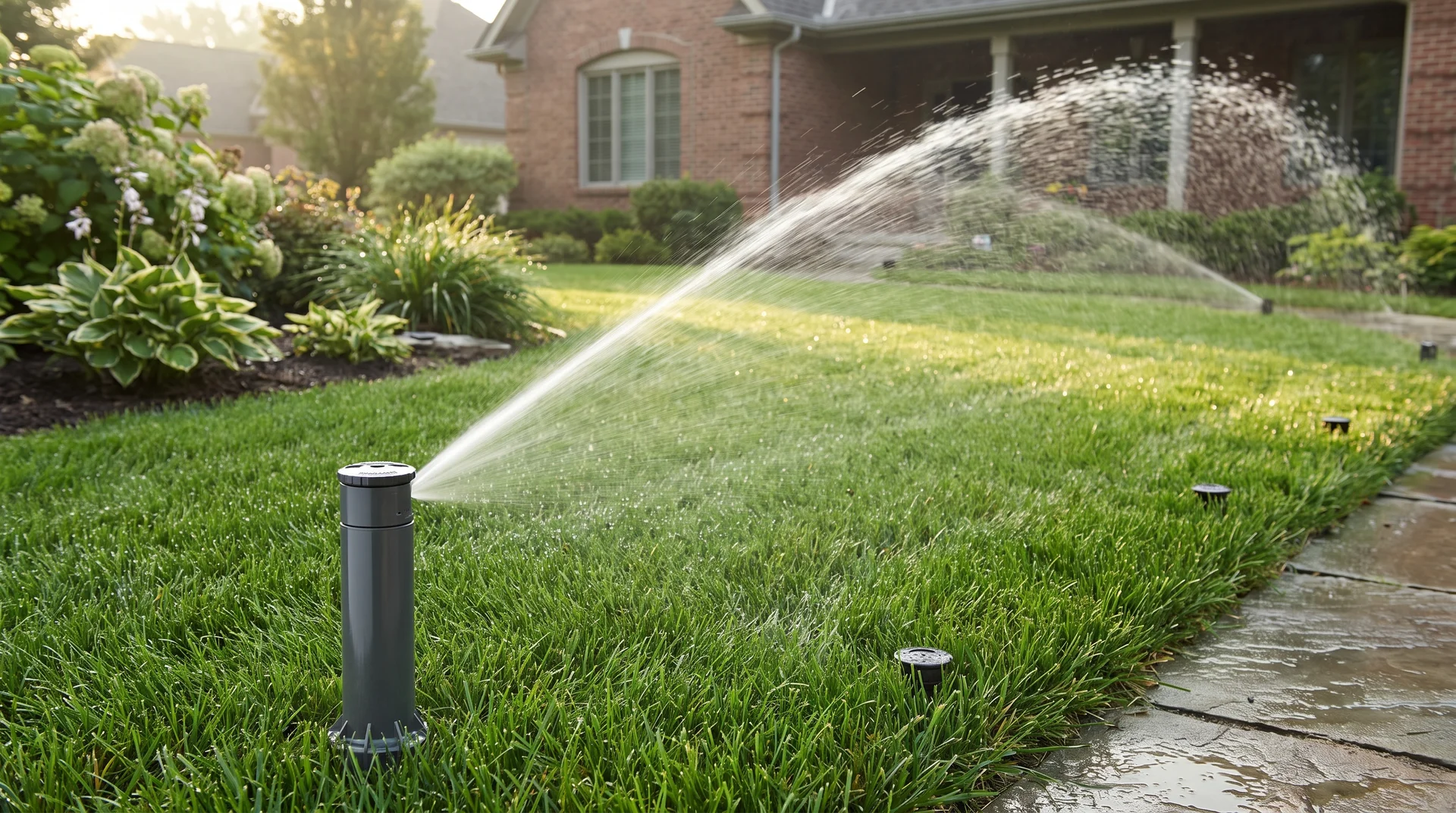
Once you know your sprinkler’s actual output, calculating the right watering time becomes much easier.
Divide your weekly watering need by your sprinkler’s hourly output. That gives you the total minutes to run the sprinkler each week. Split that total across two or three sessions instead of running it all at once. Deep, less frequent watering builds stronger roots than a quick daily splash.
Here is a quick example. Let’s say a lawn needs 1 inch per week, and a sprinkler puts out 3/4 inch per hour. That works out to about eighty minutes total for the week. Split into two sessions, which are roughly forty minutes each. Split into three, it drops to about twenty-seven minutes per session.
Actual output varies depending on water pressure and nozzle condition. Use these numbers as a starting point, not a strict rule. Your tuna can test results from the previous section should always take priority over the table below.
Here is a rough starting point by sprinkler type, based on common output rates:
If you water by hand with a hose, plan on ten minutes per section at a steady, soaking pace. Avoid a quick pass. A hose delivers water unevenly. Afterward, check the soil with a trowel to confirm it has reached a depth of a few inches.
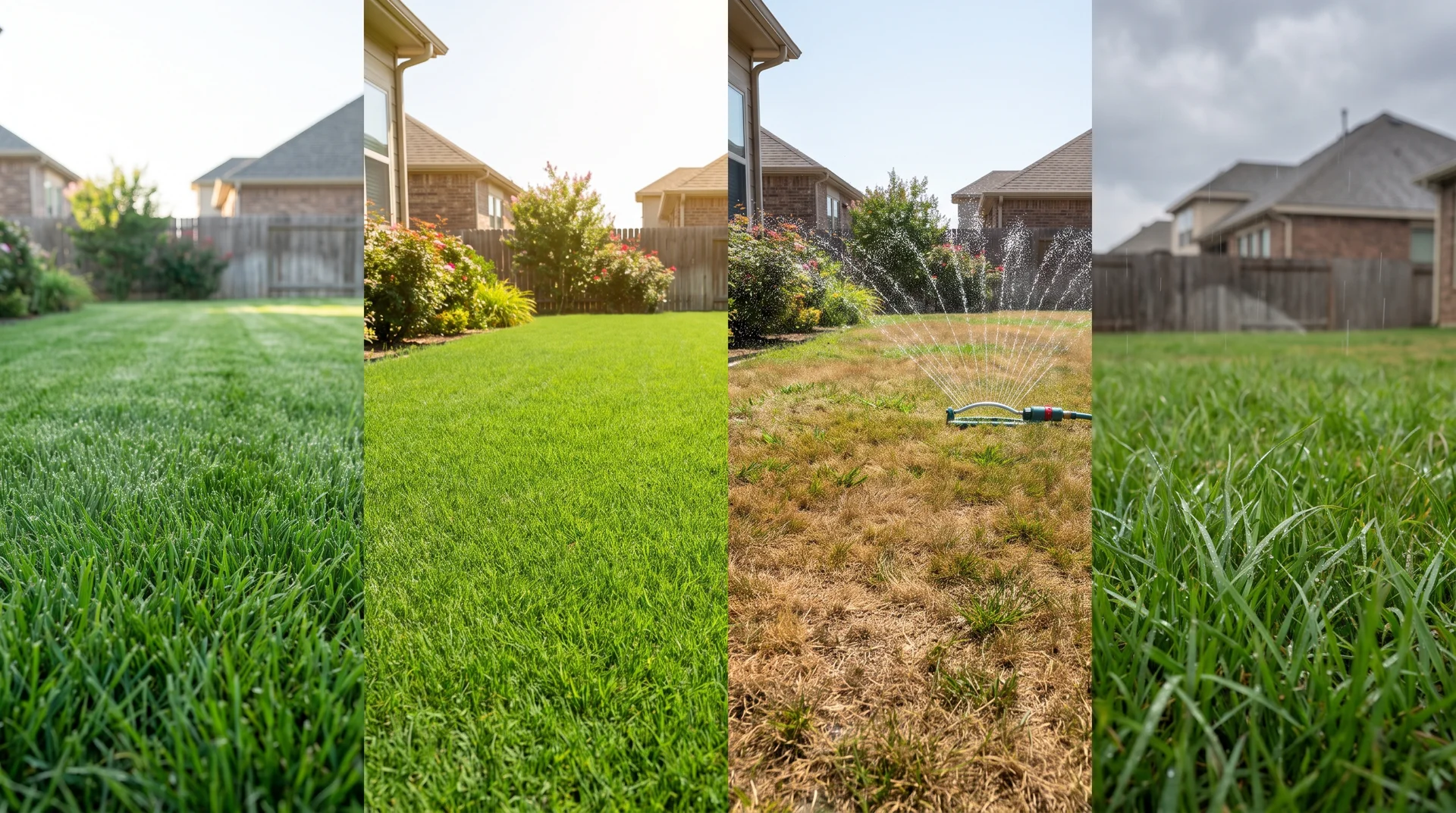
Your baseline number needs small tweaks depending on your grass and the time of year.
Cool-season grasses generally need close to the full 1.5 inches per week. This is especially true in the heat of summer. Warm-season grasses can often stay healthy on less. Sometimes, once established, half an inch per week is enough.
Summer heat raises evaporation, so many lawns need slightly more frequent sessions during that stretch. Spring and fall usually call for less, since cooler air and natural rainfall do some of the work. Winter-dormant lawns in most regions need little to no supplemental water.
Climate matters too. Dry, windy regions lose more water to evaporation and often need a third session during the hottest weeks. Humid regions can usually stick to two. Just watch for standing moisture from rain, since watering on top of it raises the risk of fungus.
In areas with strict watering restrictions, some people may need to reduce or adjust this schedule. A no-grass front yard built from gravel and drought-tolerant beds needs no such routine.
Always subtract rainfall from your weekly goal. Say your lawn needs 1 inch and you get 0.5 inches of rain. Your sprinkler only needs to supply the remaining half inch. A basic rain gauge makes this quick to track from week to week.
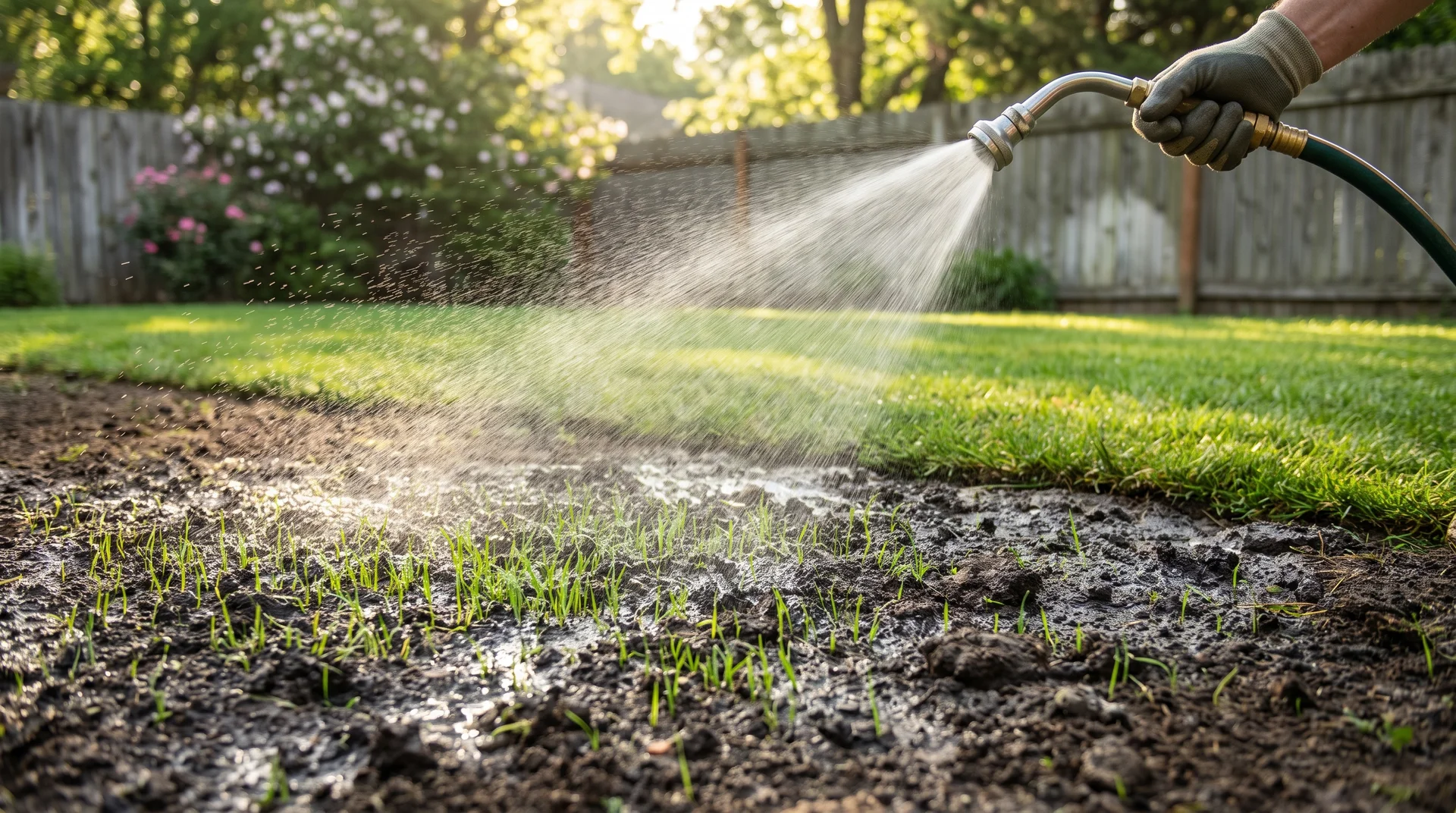
New grass needs a more careful watering routine than an established lawn, especially during the first few weeks.
Fresh seed needs the top inch of soil to stay consistently moist until it germinates. This usually means light watering once or twice a day for the first week or two. Short, frequent bursts work better here than one long soak. The seed sits close to the surface and dries out fast.
New sod follows a similar pattern at first, then shifts toward deeper and less frequent watering as roots take hold.
Most sod needs daily watering for the first week, then a gradual pullback over the next two to three weeks. Once you see steady new growth and roots that resist a gentle tug, ease back into the normal schedule above.
The time of day you water affects evaporation, soil absorption, and how long grass blades remain wet.
Aim for the stretch between four and nine in the morning. Cooler air and calmer winds let water soak in rather than evaporate. Grass blades also have hours to dry out before dark falls, which reduces fungal problems.
Midday watering wastes water since much of it evaporates before it soaks in. Late evening or overnight watering is the riskiest choice. Wet grass sitting overnight gives fungus hours to take hold, especially in warm, humid weather.
If mornings do not work for your schedule, water no later than six in the evening. This gives the grass time to dry before dark.
Changes in grass color, blade shape, soil moisture, and the speed at which footprints disappear can help you identify watering problems before the lawn becomes severely stressed.
Signs of underwatering include:
Signs of overwatering include:
Try a quick soil check to back up what your eyes are telling you. After a watering session, push the tip of a screwdriver straight down into the ground. Little to no resistance for the first six inches means your timing is working. If it stops short or takes real effort, the water isn’t reaching deep enough.
If you spot underwatering, add a few minutes to each session rather than adding an extra day. This keeps the deep, infrequent pattern that builds strong roots. If you spot overwatering, cut back your minutes per session before reducing how often you water. Small adjustments over a week or two usually bring a stressed lawn back on track.
A spot that remains soggy even after reducing irrigation may not drain well enough for healthy turf. Turning it into a hardscaped smart yard space with pavers or gravel may be more practical than continuing to irrigate it as lawn.
Minutes and inches are useful, but gallons are what show up on your water bill.
One inch of water applied over 1,000 square feet equals roughly 623 gallons. Multiply 623 by your lawn area in thousands of square feet, then multiply that amount by your weekly watering target in inches.
Here is how the numbers add up:
Most water utilities bill in units of 1,000 gallons. Multiply your weekly total by your local rate to estimate the cost. Rates vary widely by city, so check a recent bill for your exact amount.
Seeing the gallon figure next to your bill makes accurate timing worthwhile. Trimming a session from forty-five minutes to thirty adds up fast over a season. First, confirm that a shorter time is enough with your own tuna-can test.
Most established lawns need about 1 to 1.5 inches of total water each week from irrigation and rainfall combined. Depending on sprinkler output, that often means two or three watering sessions lasting roughly twenty to forty-five minutes each.
The exact number for your yard depends on your sprinkler, soil, and grass type. That is why the tuna can test matters more than any generic chart.
Grab a few cans of tuna and run that test this week. Plug your number into the formula, then adjust as the seasons shift. Keep an eye on rainfall so you never water more than your lawn needs. A few minutes of measuring now pays off with a lower water bill and a healthier lawn all season long.
Ten minutes may be enough for high-output sprinklers, but not every system. Measure the collected water after 10 minutes, then adjust the runtime until your lawn reaches its weekly watering target.
Yes, occasionally, especially during extreme heat or when establishing a lawn. For established grass, deeper watering spaced across the week is usually better than watering on two consecutive days.
There is no fixed temperature cutoff. During very hot weather, water early in the morning when evaporation is lower, and avoid irrigating during the hottest part of the day.
Yes. New turf needs consistent moisture, but constantly soggy soil can restrict oxygen and encourage disease. Reduce watering gradually as roots establish, and the turf begins to hold firmly.
Three a.m. is earlier than ideal because grass may remain wet longer overnight. Watering closer to sunrise reduces leaf-wetness time while still limiting evaporation and daytime water loss.
The post How Long Should You Water Your Lawn for Healthy Grass? appeared first on Minimal And Modern.
What matters is how quickly your sprinkler applies water and how well your soil absorbs and holds it.
Your grass type also affects how much time your sprinkler needs to run. The same weekly water goal can translate into different watering times depending on your lawn’s conditions.
This blog shows you a simple test to calculate the right sprinkler time for your yard.
You will also learn the best time to water and how to spot over- or under-watering before it damages your grass.
How Much Water Your Lawn Needs to Stay Healthy
Before you set a timer, you need to know your target number. That target is not random. Grass roots typically reach four to six inches into healthy soil. Watering to that depth trains them to grow deeper rather than stay near the surface. Deeper roots handle dry spells better.
Most lawns need 1 to 1.5 inches of water each week. This total includes any rainfall. Cool-season grasses like Kentucky bluegrass and fescue tend to need water at the higher end of that range. Warm-season grasses like Bermuda, zoysia, and St. Augustine often get by on half an inch to one inch of water.
Soil plays a role too. Sandy soil drains quickly, so it needs shorter, more frequent watering. Clay soil holds water longer but absorbs it slowly. It needs less frequent watering spread over a longer session to avoid runoff. Loamy soil sits in the middle and usually handles a standard deep watering schedule without much adjustment.
Zoning matters here too. Grass and flower beds rarely need the same amount of water. Planning this into your garden layout early on keeps each zone on its own schedule instead of using one blanket setting.
A rain gauge tracks how much of your weekly total nature already covers. That takes the uncertainty out of the rainfall side of things.
Why Should You Test Your Sprinkler’s Water Output First?
Every sprinkler puts out a different amount of water, so guessing your run time rarely works.
Here is how to check:
- Place four to six empty tuna cans or other shallow containers around your lawn.
- Turn on your sprinkler and let it run for fifteen to twenty minutes.
- Measure the water depth in each can with a ruler.
- Add the depths together and divide by the number of cans to get the average.
Once you have that average, multiply it by three for a twenty-minute test. Multiply it by four for a fifteen-minute test. That gives you your sprinkler’s output per hour.
A quarter-inch average in a twenty-minute test means an hourly output near three-quarters of an inch. Every calculation in this blog starts from this one number.
How Long Should You Run a Sprinkler on Your Lawn?
Once you know your sprinkler’s actual output, calculating the right watering time becomes much easier.
Divide your weekly watering need by your sprinkler’s hourly output. That gives you the total minutes to run the sprinkler each week. Split that total across two or three sessions instead of running it all at once. Deep, less frequent watering builds stronger roots than a quick daily splash.
Here is a quick example. Let’s say a lawn needs 1 inch per week, and a sprinkler puts out 3/4 inch per hour. That works out to about eighty minutes total for the week. Split into two sessions, which are roughly forty minutes each. Split into three, it drops to about twenty-seven minutes per session.
Actual output varies depending on water pressure and nozzle condition. Use these numbers as a starting point, not a strict rule. Your tuna can test results from the previous section should always take priority over the table below.
Here is a rough starting point by sprinkler type, based on common output rates:
| Sprinkler Type | Minutes Per Session |
|---|---|
| Oscillating sprinkler | 30 to 45 |
| In ground spray head | 15 to 25 |
| In ground rotor head | 20 to 30 |
| Impact or pulsating sprinkler | 25 to 35 |
If you water by hand with a hose, plan on ten minutes per section at a steady, soaking pace. Avoid a quick pass. A hose delivers water unevenly. Afterward, check the soil with a trowel to confirm it has reached a depth of a few inches.
How Grass Type and Season Change Your Watering Needs
Your baseline number needs small tweaks depending on your grass and the time of year.
Cool-season grasses generally need close to the full 1.5 inches per week. This is especially true in the heat of summer. Warm-season grasses can often stay healthy on less. Sometimes, once established, half an inch per week is enough.
Summer heat raises evaporation, so many lawns need slightly more frequent sessions during that stretch. Spring and fall usually call for less, since cooler air and natural rainfall do some of the work. Winter-dormant lawns in most regions need little to no supplemental water.
Climate matters too. Dry, windy regions lose more water to evaporation and often need a third session during the hottest weeks. Humid regions can usually stick to two. Just watch for standing moisture from rain, since watering on top of it raises the risk of fungus.
In areas with strict watering restrictions, some people may need to reduce or adjust this schedule. A no-grass front yard built from gravel and drought-tolerant beds needs no such routine.
Always subtract rainfall from your weekly goal. Say your lawn needs 1 inch and you get 0.5 inches of rain. Your sprinkler only needs to supply the remaining half inch. A basic rain gauge makes this quick to track from week to week.
What is the Right Watering Schedule for New Grass?
New grass needs a more careful watering routine than an established lawn, especially during the first few weeks.
Fresh seed needs the top inch of soil to stay consistently moist until it germinates. This usually means light watering once or twice a day for the first week or two. Short, frequent bursts work better here than one long soak. The seed sits close to the surface and dries out fast.
New sod follows a similar pattern at first, then shifts toward deeper and less frequent watering as roots take hold.
Most sod needs daily watering for the first week, then a gradual pullback over the next two to three weeks. Once you see steady new growth and roots that resist a gentle tug, ease back into the normal schedule above.
How Does Watering Time Affect Your Lawn?
The time of day you water affects evaporation, soil absorption, and how long grass blades remain wet.
Aim for the stretch between four and nine in the morning. Cooler air and calmer winds let water soak in rather than evaporate. Grass blades also have hours to dry out before dark falls, which reduces fungal problems.
Midday watering wastes water since much of it evaporates before it soaks in. Late evening or overnight watering is the riskiest choice. Wet grass sitting overnight gives fungus hours to take hold, especially in warm, humid weather.
If mornings do not work for your schedule, water no later than six in the evening. This gives the grass time to dry before dark.
Signs You’re Watering Too Much or Too Little
Changes in grass color, blade shape, soil moisture, and the speed at which footprints disappear can help you identify watering problems before the lawn becomes severely stressed.
Signs of underwatering include:
- Dry or brown patches across the lawn
- Grass blades that curl or fold
- Footprints or mower tracks that stick around long after you cross the lawn
Signs of overwatering include:
- Soggy or spongy soil that squishes underfoot
- Mushrooms or visible fungal growth
- Yellowing grass even though you are watering often
Try a quick soil check to back up what your eyes are telling you. After a watering session, push the tip of a screwdriver straight down into the ground. Little to no resistance for the first six inches means your timing is working. If it stops short or takes real effort, the water isn’t reaching deep enough.
If you spot underwatering, add a few minutes to each session rather than adding an extra day. This keeps the deep, infrequent pattern that builds strong roots. If you spot overwatering, cut back your minutes per session before reducing how often you water. Small adjustments over a week or two usually bring a stressed lawn back on track.
A spot that remains soggy even after reducing irrigation may not drain well enough for healthy turf. Turning it into a hardscaped smart yard space with pavers or gravel may be more practical than continuing to irrigate it as lawn.
What Your Watering Schedule May Cost?
Minutes and inches are useful, but gallons are what show up on your water bill.
One inch of water applied over 1,000 square feet equals roughly 623 gallons. Multiply 623 by your lawn area in thousands of square feet, then multiply that amount by your weekly watering target in inches.
Here is how the numbers add up:
| Lawn Size | Gallons for 1 Inch Weekly |
|---|---|
| 2,000 sq ft | About 1,250 gallons |
| 5,000 sq ft | About 3,100 gallons |
| 8,000 sq ft | About 5,000 gallons |
Most water utilities bill in units of 1,000 gallons. Multiply your weekly total by your local rate to estimate the cost. Rates vary widely by city, so check a recent bill for your exact amount.
Seeing the gallon figure next to your bill makes accurate timing worthwhile. Trimming a session from forty-five minutes to thirty adds up fast over a season. First, confirm that a shorter time is enough with your own tuna-can test.
Ready to Build a Better Lawn Watering Routine?
Most established lawns need about 1 to 1.5 inches of total water each week from irrigation and rainfall combined. Depending on sprinkler output, that often means two or three watering sessions lasting roughly twenty to forty-five minutes each.
The exact number for your yard depends on your sprinkler, soil, and grass type. That is why the tuna can test matters more than any generic chart.
Grab a few cans of tuna and run that test this week. Plug your number into the formula, then adjust as the seasons shift. Keep an eye on rainfall so you never water more than your lawn needs. A few minutes of measuring now pays off with a lower water bill and a healthier lawn all season long.
Frequently Asked Questions
Is 10 minutes of sprinkler enough?
Ten minutes may be enough for high-output sprinklers, but not every system. Measure the collected water after 10 minutes, then adjust the runtime until your lawn reaches its weekly watering target.
Can I water my lawn 2 days in a row?
Yes, occasionally, especially during extreme heat or when establishing a lawn. For established grass, deeper watering spaced across the week is usually better than watering on two consecutive days.
What temperature is too hot to water grass?
There is no fixed temperature cutoff. During very hot weather, water early in the morning when evaporation is lower, and avoid irrigating during the hottest part of the day.
Can you overwater new turf?
Yes. New turf needs consistent moisture, but constantly soggy soil can restrict oxygen and encourage disease. Reduce watering gradually as roots establish, and the turf begins to hold firmly.
Is 3 am too early to start watering a lawn?
Three a.m. is earlier than ideal because grass may remain wet longer overnight. Watering closer to sunrise reduces leaf-wetness time while still limiting evaporation and daytime water loss.
The post How Long Should You Water Your Lawn for Healthy Grass? appeared first on Minimal And Modern.