Narrative and Critical History of America, Vol. 6 (of 8) The United States of North America, Part I — Themes and Context

(0 User reviews)   314
In Category - Modern Nations
Winsor, Justin, 1831-1897 [Editor] Project Gutenberg 2016 Not confirmed
America -- Discovery and exploration; United States -- History; America -- History Readers of public-domain and historical texts
Project Gutenberg digital edition en

Edition facts

Words 430,036
Reading time 1870 min
Text sections 83

For Narrative and Critical History of America, Vol. 6 (of 8) The United States of North America, Part I — Themes and Context, the stored edition analysis reports 430,036 words, 31 hr 10 min estimated reading time, and 83 detected text sections.

The text analysis averages about 14.5 words per sentence, while the detected sections provide another way to judge how the source is divided.

Project Gutenberg metadata also associates the work with “America -- Discovery and exploration,” connecting these edition facts with the source record’s subject description.

This editorial note examines the structural and critical apparatus of Justin Winsor's edited volume, focusing on its layered documentation, use of facsimiles and illustrations as evidence, and the movement between narrative chapters and critical essays.
Share
Editorial Edition Score 4.9/5

Calculated from edition completeness, EPUB availability, text structure and catalogue metadata. Not a user rating.

How this score is calculated
  • Description quality20 pts
  • Title & short description10 pts
  • Source metadata20 pts
  • Text length15 pts
  • Chapters / structure15 pts
  • EPUB file integrity20 pts

Total of 100 points, scaled to a 2.5-5.0 range. Editions with an empty description or a missing EPUB file are not scored.

Edition quality

Read the Text

THE REVOLUTION IMPENDING. _Mellen Chamberlain_ 1

ILLUSTRATIONS: George III., 20; Lord North, with Autograph, 21; Rockingham, 31; Fac-simile of _Glorious News_, May 16, 1766, 33; John Adams, 36; Fac-simile of Adams's Writing, 37; Samuel Adams, with Autograph, 40; Samuel Adams, 41; Revere's Plan of State Street at the time of the Boston Massacre, 48; Autographs of the Court for the Trial following the Boston Massacre,—Benjamin Lynde, John Cushing, Peter Oliver, Edmund Trowbridge, Jonathan Sewall, Samuel Winthrop, 50; of the Counsel,—Robert Treat Paine, Samuel Quincy, John Adams, Josiah Quincy, Jr., and Sampson S. Blowers, 51; Joseph Warren, 54; Fac-simile of Broadside, June 22, 1773, 55; A Contemporary Print, 59; Broadside, June 17, 1774, 61.

ILLUSTRATIONS: Statue of James Otis, 69; Jonathan Mayhew, 71; Autograph of Charles Chauncey, 71; George III., 76; Fac-simile of Handbill, Faneuil Hall Meeting, Oct. 28, 1767, 77; of Broadside, _The True Sons of Liberty_, 78; List of Merchants importing contrary to agreement, 79; Broadside proscribing William Jackson, 80; Revere's Cut of the Landing of Troops in Boston, 1768, 81; John Dickinson, with Autograph, 82; Autograph of James Bowdoin, 83; William Livingston, 84; Liberty Song, 86; Massachusetts Liberty Song, 87; Fac-simile of Instructions to Representatives, signed by Richard Dana and William Cooper, 87; Handbill on the Anniversary of the Boston Massacre, 89; Handbill of Warning, Dec. 2, 1773, 92; Philadelphia Poster about the Tea-Ships, 93; Josiah Quincy's Manuscript Dedication of his Port-Bill Tract, 94; Quincy Mansion, 96; Handbill announcing the Port Bill and Regulating Bill, 97; Handbill of General Brattle's Letter, 1774, 98; Autograph of Thomas Cushing, 99; Signers of the Congress of 1774, 102; Satirical Print, _Virtual Representation_, 103; Josiah Quincy's Diary, 105; Lord North, 107; Chatham, 109; Richard Price, Portrait and Autograph, 111; Autograph of Lord Dartmouth, 111.

THE CONFLICT PRECIPITATED. _The Editor_ 113

ILLUSTRATIONS: Autograph of Admiral Graves, 114; Notice of Committee of Correspondence, signed by William Cooper, 115; Autograph of Jedediah Preble, 116; of Joseph Hawley, 118; Roads of Roxbury and beyond, 120; Roads between Boston and Marlborough, 121; Heath's Account of the Fight at Menotomy, 126; General Heath, with Autograph, 127; Autograph of Ethan Allen, 128; Ruins of Ticonderoga, 129; Pen-and-Ink Sketch of the Roxbury Lines, 130; Warren's Last Note, 132; Notice to the Militia, 133; Order of the Committee of Safety, 135; Autograph of Colonel William Prescott, 135; of John Brooks, 136; of General Howe, 136; of John Stark, 137; of Richard Pigot, 137; of Governor Tryon, with seal, 140; of Joseph Reed, 141; Washington's Heads of Letter, July 10, 1775, 141; Letter of John Hancock, June 22, 1775, 143; Autograph of General Gage, 145; Handbill thrown within the British Lines, 147; Views of Country around Boston from Beacon Hill, 148, 149, 150, 151; A Vaudevil on _The Boston Blockade_, 154; Playbill of Zara, 155; Autograph of General Knox, 156; Views of Boston and of the Castle, 157; Proclamation of Washington, 159; Guy Carleton, with Autograph, 164; Seal of Lord Dunmore, 167; Plan of Attack on Fort Moultrie, 169; Plan of Attack on Charlestown, S. C., 170; William Moultrie, 171.

ILLUSTRATIONS: Colonel Parker's Lexington Deposition, 176; Colonel Barrett's Concord Deposition, 177; Plan of Lexington, 179; of Concord, 180; Emerson's Diary, 181; Earl Percy, 182, 183; Lexington Green, 185; Richard Frothingham, 186; Ezra Stiles, with Autograph, 188; Autograph of Samuel Swett, 191; General Putnam, with Autograph, 192; Autograph of General Ward, 192; Joseph Warren, 193; Handbill (Tory Account) of the Battle of Bunker Hill, 196; View of the Battle of Bunker Hill, 197; Plans of Charlestown Peninsula and the Battle, 198, 199; Plan of the Battle, 201; Autograph of General Heath, 203; Plan of the Siege of Boston, 206; Boston and Vicinity, June, 1775, 208; Boston and Charlestown, 1775, 210; British Lines on Boston Neck, 211; Map of the St. Lawrence and Sorel Rivers, 215; General Montgomery on the Capitulation of St. John, 217; Attestation of Montgomery's Will, 218; Richard Montgomery, 220, 221; Benedict Arnold, with Autograph, 223; Montresor's Map of the Kennebec Region, 224; David Wooster, with Autograph, 225; Plan of Siege of Quebec, 226; Autograph of Charles Carroll of Carrollton, 227; View of Sullivan's Island, 228; View of Charlestown, S. C., and the British Fleet (1776), 229.

THE SENTIMENT OF INDEPENDENCE, ITS GROWTH AND CONSUMMATION. _George E. Ellis_ 231

ILLUSTRATIONS: Autographs of the Mecklenburg Committee, 256; Thomas Jefferson, 258; State House, Philadelphia, 259; Original Draft of the Declaration of Independence, 260; Autograph of Thomas Jefferson, 261; Portrait and Autograph of Roger Sherman, 262; Autographs of the Signers of the Declaration of Independence, 263-266; Fac-simile of a Contemporary Broadside of the Declaration, 267; John Dickinson, 268; John Hancock (the Scott picture), 270; (a German picture), 271; Charles Thomson, 272; Fac-simile of a Page of Christopher Marshall's Diary, 273.

THE STRUGGLE FOR THE HUDSON. _George W. Cullum_ 275

ILLUSTRATIONS: Mortier House, on Richmond Hill, Washington's Headquarters, 276; Lord Howe, 277; General Sir William Howe, 278; Lord Stirling, 280; Roger Morris House, Washington's Harlem Headquarters, 284; Autograph of Knyphausen, 289; Portrait and Autograph of Burgoyne, 292; another Portrait, 293; Lord George Germain, 295; General Arthur St. Clair, 297; Autograph of General Schuyler, 297; General John Stark, 301; General Horatio Gates, 302; General Horatio Gates, with Autograph, 303; Sir Henry Clinton, Portraits and Autograph, 306, 307; General George Clinton, 308; Fac-simile of Burgoyne's Letter to Gates, 310; Rude contemporary Cuts of Washington and Gates, 311.

DISPOSAL OF THE CONVENTION TROOPS 317

Justin Winsor's Narrative and Critical History of America, Volume VI, is distinguished by its dual structure: each chapter is followed by a critical essay and editorial notes, creating a layered reading experience that separates narrative from scholarly apparatus. The volume opens with a chapter on "The Revolution Impending" by Mellen Chamberlain, then shifts to a critical essay and editorial notes, each with their own illustrations. This architecture invites readers to move between a continuous historical account and a dense web of citations, facsimiles, and bibliographic references.

A Chapter-and-Essay Architecture

The volume's organization is not a simple chronological narrative. Each of the 83 text sections pairs a narrative chapter with a critical essay and editorial notes. For instance, Chapter I, "The Revolution Impending," is followed by a critical essay and then editorial notes, each with separate illustration lists. This structure allows Winsor to present a coherent story while simultaneously exposing the evidentiary base. The reader is encouraged to consult the critical essays for historiographic context and the notes for source citations. The separation is physical: the narrative chapters occupy the first part of the volume, while the critical apparatus follows, creating a deliberate pause between reading and analysis.

Illustrations as Evidence, Not Ornament

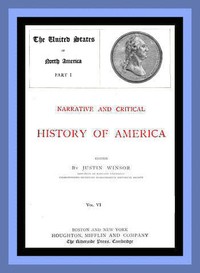
Winsor integrates illustrations not merely as decoration but as primary sources. The volume includes facsimiles of broadsides, handbills, and autographs—such as "Revere's Plan of State Street at the time of the Boston Massacre" and a "Fac-simile of Broadside, June 22, 1773." These images are listed in the contents with precise descriptions, signaling their evidentiary role. The cut on the title page shows the obverse of the Washington medal struck to commemorate the siege of Boston, linking visual culture to historical commemoration. By reproducing documents like the "Philadelphia Poster about the Tea-Ships" and "Handbill of Warning, Dec. 2, 1773," Winsor allows readers to examine the material forms through which colonial resistance was communicated.

Movement Between Narrative and Documentation

The volume's movement between narrative and documentation is exemplified in the treatment of Indian affairs. The narrative chapter likely discusses the use of Native American allies, but the critical apparatus provides a dense trail of references: from Elias Boudinot's A Star in the West to Franklin's list of warriors, from the American Pioneer to the Journals of Congress. Winsor's editorial notes cite specific pages and editions, such as "Drake's Indian Biography" and "Benjamin Vaughan's Political, Miscellaneous, and Philosophical Pieces." This movement from story to source encourages readers to verify claims and explore original materials. The note on Colonel Force's American Archives criticizes its indexes for not "suitably analyz[ing] their contents," showing Winsor's critical engagement with his sources.

Recurring Attention to British and American Perspectives

Throughout the critical apparatus, Winsor juxtaposes British and American sources. He cites Almon's Remembrancer and the Parliamentary Register as "the original authority for much of our information," alongside American compilations like Moore's Diary of the American Revolution. The excerpt on Indian employment includes a review from The Monthly Review that quotes a letter referencing Carleton's commission and Guy Johnson's war-belts. Winsor notes that "the Congress is possessed of those very war-belts," grounding the debate in material evidence. This dual perspective is reinforced by the inclusion of autographs from both American and British figures, such as John Adams and Lord North, and by listing the autographs of the court and counsel in the Boston Massacre trial.

Readers approaching this volume should be prepared to navigate between narrative and critical sections, using the detailed contents and illustration lists as a guide. The editorial notes function as a bibliographic roadmap, pointing to primary sources and historiographic debates. Winsor's method rewards those who follow the trail of citations, offering a model of historical scholarship that is both narrative and analytical.

In the old Winsor volume, I always loved how the marginalia and facsimiles whispered their own quiet testimony beside the grand narrative. It reminded me of another private conversation, between a man and his adopted nation, found within My Life in China and America — Inside the Classic. Both are gentle companions, patient in their layered truths, waiting years for a reader’s fond glance.

There are no reviews for this eBook.

0
0 out of 5 (0 User reviews )

Add a Review

Your Rating *
There are no comments for this eBook.

Reader reflection

Your personal reading reflection

Build a private reading journal entry for this title.

Your progress 0 / 10
1

What is your current status with this title?

2

How much did you enjoy the reading experience?

3

Would you encourage someone else to read it?

4

Did the language feel accessible?

Related eBooks