About 329 minutes
The Expansion of Europe; The Culmination of Modern History — Key Ideas to Explore
Modern Nations
75,441 recorded words. 16 minutes difference from this book's estimate.
View Gutenberg source #4326
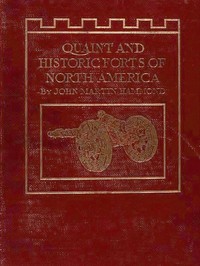
The source record for Quaint and Historic Forts of North America — Themes and Context measures this digital text at 79,326 words, 5 hr 45 min estimated reading time, and 12 detected text sections.
The text analysis averages about 25.0 words per sentence, while the detected sections provide another way to judge how the source is divided.
Project Gutenberg metadata also associates the work with “Historic buildings -- United States,” connecting these edition facts with the source record’s subject description.
Explore this collection
These alternatives are selected using recorded categories and estimated reading time.
About 329 minutes
Modern Nations
75,441 recorded words. 16 minutes difference from this book's estimate.
View Gutenberg source #4326About 367 minutes
Modern Nations
84,215 recorded words. 22 minutes difference from this book's estimate.
View Gutenberg source #17917About 322 minutes
Modern Nations
73,841 recorded words. 23 minutes difference from this book's estimate.
View Gutenberg source #15100Search stored excerpts and compare books → Choose by your preferences →
Choices use stored catalog measurements. Estimates vary with reading speed. A shared category is a catalog label, not a claim that two books have the same argument or literary quality.
Search reads excerpt text stored with this catalog and links to its associated Gutenberg record. The connection is stored in the site database; this tool does not recheck that every excerpt is word-for-word identical to that external record. Excerpt search does not cover every chapter and does not verify historical publication dates.
Catalog snapshot checked: 2026-09-26. Coverage: 99 public books, 99 available source excerpts.
Calculated from edition completeness, EPUB availability, text structure and catalogue metadata. Not a user rating.
Total of 100 points, scaled to a 2.5-5.0 range. Editions with an empty description or a missing EPUB file are not scored.
Public-domain source text
The source text is kept in the dedicated reader, separate from this catalogue record and its commentary.
John Martin Hammond opens his 1915 survey, Quaint and Historic Forts of North America, with a preface that frames the work as a cross-section of military history, noting the Spanish, French, English, Dutch, and Swedish contests for the continent. He observes that the English were not great fort builders but tillers of the soil, a claim that sets up a contrast between architectural remnants and national character. The preface also mentions the mounds of the Middle West, hinting at pre-Columbian builders, though Hammond admits little is known of them. This opening establishes a tone of measured curiosity, blending historical summary with a hint of the picturesque suggested by the title's word 'quaint.'
Hammond's preface does more than introduce; it primes the reader for a selective tour. He explicitly states that the book presents 'the most famous fortifications' and that this method will add interest to 'the conspicuous deeds of valor.' The reader is thus warned that the focus is on celebrated sites and dramatic episodes, not exhaustive military analysis. The preface also reveals Hammond's interpretive bent: he sees the forts as evidence of racial struggles, with the English ultimately prevailing due to 'home-building genius.' This lens colors every subsequent chapter, making the preface essential for understanding the author's choices. A first-time reader should note that Hammond is not a neutral cataloger but a storyteller with a thesis about national character.
The excerpt on West Point, drawn from the book's middle, demonstrates Hammond's method at its most vivid. He recounts Benedict Arnold's treachery with novelistic specificity: the signature 'Gustavus,' the 'rambling old house' of Colonel Beverly Robinson, and the morning Arnold fled after learning of Major André's capture. Hammond includes the conjecture about Margaret Shippen's influence but hedges—'There is no evidence to finally set at rest this conjecture.' This caution is typical of the book's approach: Hammond weaves a compelling narrative but occasionally flags uncertainty. The passage also shows his reliance on dramatic turning points, such as Washington arriving 'in time to gather up the loose ends.' Readers should watch for this pattern of high-stakes storytelling balanced with scholarly restraint.
The three excerpts reveal a notable shift in Hammond's voice. The preface is broad and declarative, making claims about entire races and centuries. The West Point section is tightly focused on a single episode, with a novelist's eye for setting and character. The closing excerpt, however, abruptly returns to the Project Gutenberg colophon, a reminder that the text we have is a digital reproduction. This juxtaposition highlights a challenge for first-time readers: the book itself is a patchwork of grand overviews and intimate vignettes. Hammond moves from the Spanish at St. Augustine to the Dutch on the Hudson without transition, assuming the reader will follow. The excerpts suggest that the book rewards those who accept its episodic structure and enjoy the detours into personal drama.
Several details recur across the excerpts, offering clues to Hammond's priorities. He repeatedly emphasizes the physical remnants of forts—the 'ancient watch-tower' of Fort Marion, the 'substantial relics' at St. Augustine and Pensacola. This material focus aligns with the book's many illustrations (seventy-one, per the title page). He also returns to the theme of national character: the English are 'home-builders,' the Spanish 'relentless,' the French 'military.' These characterizations are broad but consistent. Another recurring element is the mention of uncertainty—about the mound-builders, about Arnold's wife's influence. Hammond does not pretend to have all answers, which lends his narrative a candid, exploratory feel. Readers should note these touchstones as they navigate the book's varied chapters.
Approaching Quaint and Historic Forts of North America as a first-time reader, it helps to treat each chapter as a self-contained essay rather than expecting a continuous argument. Hammond's strength lies in his ability to animate a single fort or event with vivid detail, as he does with West Point. His weaknesses—sweeping generalizations and abrupt transitions—are easier to accept when seen as features of an early 20th-century popular history. Let the preface set your expectations, and let the illustrations ground you in the physical places Hammond describes.
Leafing through Hammond’s forts, past his careful West Point detail, I found a strange calm in the final, drifting chapters—empires receding like tides. It recalled another kind of solitary record, a life spent within distant walls, never fully belonging. That quiet, watchful loneliness lingers in The Englishman in China During the Victorian Era, Vol. 1 (of 2) As Illustrated in the Career of Sir Rutherford Alcock, K.C.B., D.C.L., Many Years Consul and Minister — Context and Discussion, a different sort of frontier altogether.
Answer a few questions and save a private reflection on this device.