About 71 minutes
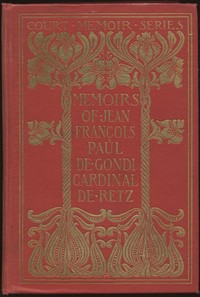
Memoirs of Jean François Paul de Gondi, Cardinal de Retz — Volume 4 — Inside the Classic
Modern Nations
16,310 recorded words. 2 minutes difference from this book's estimate.
View Gutenberg source #3845

The catalog record for The Memoirs of Count Grammont — Volume 01 — Reading Notes provides practical reading context through 15,680 words, 1 hr 9 min estimated reading time, and 2 detected text sections.
The text analysis averages about 26.5 words per sentence, while the detected sections provide another way to judge how the source is divided.
Project Gutenberg metadata also associates the work with “Gramont, Philibert, comte de, 1621-1707,” connecting these edition facts with the source record’s subject description.
Explore this collection
These alternatives are selected using recorded categories and estimated reading time.
About 71 minutes
Modern Nations
16,310 recorded words. 2 minutes difference from this book's estimate.
View Gutenberg source #3845About 57 minutes
Modern Nations
12,884 recorded words. 12 minutes difference from this book's estimate.
View Gutenberg source #40274About 82 minutes
Modern Nations
18,744 recorded words. 13 minutes difference from this book's estimate.
View Gutenberg source #7252Search stored excerpts and compare books → Choose by your preferences →
Choices use stored catalog measurements. Estimates vary with reading speed. A shared category is a catalog label, not a claim that two books have the same argument or literary quality.
Search reads excerpt text stored with this catalog and links to its associated Gutenberg record. The connection is stored in the site database; this tool does not recheck that every excerpt is word-for-word identical to that external record. Excerpt search does not cover every chapter and does not verify historical publication dates.
Catalog snapshot checked: 2026-09-26. Coverage: 99 public books, 99 available source excerpts.
Calculated from edition completeness, EPUB availability, text structure and catalogue metadata. Not a user rating.
Total of 100 points, scaled to a 2.5-5.0 range. Editions with an empty description or a missing EPUB file are not scored.
Public-domain source text
The source text is kept in the dedicated reader, separate from this catalogue record and its commentary.
Anthony Hamilton's Memoirs of Count Grammont opens with a first-person account that immediately establishes a voice at once self-deprecating and defiant. The Chevalier Grammont describes his youth in Gascony, where he was destined for the church but resisted Latin lessons, preferring gambling and idleness. The narrative voice is colloquial and wry, as when Grammont recalls that he was 'raised to all the dignities of the forms, without having merited them.' This tone of ironic self-awareness pervades the memoir, distinguishing it from straightforward historical chronicle.
Hamilton's editorial apparatus, including Sir Walter Scott's biographical sketch, frames the work as both a historical document and a literary performance. The excerpts reveal a text that oscillates between Grammont's boastful anecdotes and the editor's scholarly annotations, creating a layered reading experience.
Grammont's narrative voice is the most striking feature of the memoir. He speaks directly to the reader, using colloquial phrases and a tone of casual superiority. When describing his appearance at court in an abbé's cassock over riding boots and spurs, he notes that 'the Cardinal, who had a quick discernment, could not help laughing.' The humor arises from Grammont's own delight in his absurd costume, which he describes with evident pride. His diction is peppered with self-mockery: he admits to leaving college 'nearly in the same state in which I entered it,' yet frames this as a mark of his quality. This voice is not merely anecdotal; it shapes the reader's perception of Grammont as a man who navigates social hierarchies through wit and audacity.
Hamilton's choice of words reveals Grammont's calculated self-presentation. He uses military and gaming metaphors to describe his education: 'gaming was so much in my head' and 'I soon learned all that is taught at such places, and, at the same time, I also learnt that which gives the finishing stroke to a young fellow's education, viz. all sorts of games.' The repetition of 'games' blurs the line between leisure and life skills. Grammont's description of his brother's reaction—'ready to die with laughing at my ecclesiastical habit'—shows how language is used to align the reader with the speaker's perspective. The memoir's diction thus constructs a persona that is both reckless and calculating, a courtier who turns his vices into virtues.
The excerpts contain extended dialogue that reveals character through speech patterns. Grammont's brother addresses him as 'my little parson' and 'my little knight,' using diminutives that underscore the age and power dynamic. Grammont's reply—'I am resolved to renounce the church for the salvation of my soul, upon condition, however, that I keep my abbacy'—is a masterpiece of ironic logic, turning piety into a bargaining chip. The brother's speech is pragmatic and worldly, contrasting with Grammont's flippant cunning. These exchanges are not merely decorative; they advance the narrative of Grammont's rebellion against family expectations while showcasing his verbal dexterity. Hamilton uses dialogue to dramatize the clash between ecclesiastical duty and aristocratic ambition.
Hamilton's descriptive passages ground the memoir in a specific social world. Grammont's costume—'white buskins and gilt spurs' over a cassock—is a visual emblem of his dual identity. The setting of the college of Pau and the court of Turin are sketched with minimal detail, but the focus on material objects (hair 'well curled and powdered,' the 'finest head of hair in the world') signals the importance of appearance in courtly life. The memoir also references specific games and pastimes, such as 'all sorts of games, both at cards and dice,' which serve as markers of gentility. These details are not incidental; they construct a milieu where social standing is performed through dress, speech, and leisure. Hamilton's descriptions thus function as a kind of ethnographic record of 17th-century aristocratic culture.
Readers attentive to authorial choices will find in this volume a rich study of how a memoirist shapes his own legend. Grammont's voice—at once boastful and self-aware—invites skepticism even as it charms. The editorial frame by Scott adds a layer of historical distance, reminding us that this is a constructed narrative. Approach the text as a performance: watch for the gaps between what Grammont says and what he reveals, and enjoy the verbal play of a courtier who knew that style could be a form of power.
I finished the Grammont memoirs and kept thinking how he turns rebellion into a sort of wry game—laughing at himself while watching everyone else. It reminded me of that quiet moment in History of Friedrich II of Prussia — Volume 16 — Themes and Context where power feels less like triumph and more like a tired shrug. Both lingered, oddly warm.
Build a private reading journal entry for this title.