About 351 minutes
Russian Memories — Themes and Context
Social History
80,585 recorded words. 52 minutes difference from this book's estimate.
View Gutenberg source #54507
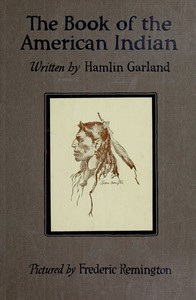
The source record for The book of the American Indian — Text and Context measures this digital text at 92,662 words, 6 hr 43 min estimated reading time, and 38 detected text sections.
The text analysis averages about 15.8 words per sentence, while the detected sections provide another way to judge how the source is divided.
Project Gutenberg metadata also associates the work with “Frontier and pioneer life -- West (U.S.),” connecting these edition facts with the source record’s subject description.
Explore this collection
These alternatives are selected using recorded categories and estimated reading time.
About 351 minutes
Social History
80,585 recorded words. 52 minutes difference from this book's estimate.
View Gutenberg source #54507About 340 minutes
Social History
78,158 recorded words. 63 minutes difference from this book's estimate.
View Gutenberg source #2115About 337 minutes
Social History
77,477 recorded words. 66 minutes difference from this book's estimate.
View Gutenberg source #2112Search stored excerpts and compare books → Choose by your preferences →
Choices use stored catalog measurements. Estimates vary with reading speed. A shared category is a catalog label, not a claim that two books have the same argument or literary quality.
Search reads excerpt text stored with this catalog and links to its associated Gutenberg record. The connection is stored in the site database; this tool does not recheck that every excerpt is word-for-word identical to that external record. Excerpt search does not cover every chapter and does not verify historical publication dates.
Catalog snapshot checked: 2026-09-26. Coverage: 99 public books, 99 available source excerpts.
Calculated from edition completeness, EPUB availability, text structure and catalogue metadata. Not a user rating.
Total of 100 points, scaled to a 2.5-5.0 range. Editions with an empty description or a missing EPUB file are not scored.
Public-domain source text
The source text is kept in the dedicated reader, separate from this catalogue record and its commentary.
The book opens not with a panoramic view of the Plains but with a specific, almost bureaucratic observation: the Indian Agency at Darlington was "dull and commonplace if not actually dispiriting." This mundane detail sets the stage for a work that repeatedly juxtaposes the everyday realities of reservation life with the remembered grandeur of the buffalo-hunting era. Garland, who traveled and interviewed Native people, structures his narratives around moments of transition—a mother's sacrifice, a chief's council, a dance forbidden. The movement between scenes is often abrupt, shifting from a quiet domestic interior to the open prairie or a tense negotiation, mirroring the abrupt changes forced upon the tribes.
Across the excerpts, a specific image recurs: the buffalo as both sustenance and symbol. In the account of Sitting Bull, the narrator recalls a time when "the hills were clouded with buffalo, the cherries are ripening in the thickets." This pairing of animal and plant abundance appears in several stories, grounding the reader in a seasonal, land-based economy. Yet the same passages note that the buffalo "were always shifting ground" and "mysteriously appear and disappear." Garland uses this natural cycle to foreshadow the more permanent disappearance to come. The contrast between the plenty of the past and the scarcity of the reservation era is not stated directly but emerges through these repeated, almost ritualistic descriptions of game and harvest. The reader is left to connect the dots between the cherry thickets and the agency's dullness.
Garland employs a layered narrative voice. Many sections are told by an unnamed Native narrator who uses phrases like "my people" and "as you white men call them." This creates an intimate, first-plural perspective that directly addresses the reader as an outsider. The narrator often corrects or reframes white perceptions: Sitting Bull was called "a fierce warrior, ever ready to kill, when the truth is he protected those who came to his camp." This corrective impulse runs throughout the excerpts, but Garland does not fully abandon the third-person omniscient style of the period. The result is a hybrid voice—part memoir, part history, part editorial—that shifts between insider testimony and detached observation. The reader must attend to who is speaking and when, as the narrative authority is not uniform.
The table of contents reveals a deliberate structural arc. The book begins with short, titled stories—"Wahiah—A Spartan Mother," "Nistina," "The Iron Khiva"—each focused on a single character or event. These read like literary sketches. But the longest section, "The Silent Eaters," is a fourteen-part chronicle of Sitting Bull's life, from his rise to power through the Battle of the Little Bighorn to his death. This shift from vignette to sustained biography suggests a movement from the general to the particular, from legend to documented history. The earlier stories establish themes—motherhood, warfare, medicine—that the Sitting Bull narrative then embodies in a single, historically grounded figure. The reader moves from a series of impressionistic portraits to a detailed case study, a structure that rewards attention to recurring motifs.
Garland frequently moves his scenes between the enclosed space of a lodge or agency building and the open landscape. In the Sitting Bull account, the chief "laid aside all weapons" inside his lodge, carrying only his pipe-bag and fan, while outside the "hills were clouded with buffalo." This interior-exterior contrast is not merely scenic; it defines the terms of power and vulnerability. Inside the lodge, decisions are made with calm authority; outside, the buffalo roam, enemies approach, and white men's boats come up the Missouri. The agency itself is described as a place where the "sun blaze" beats down, a liminal zone between the old world and the new. By alternating between these settings, Garland creates a rhythm of council and action, reflection and consequence, that mirrors the precarious balance of Plains life.
Readers should note that Garland's work is a composite: part fiction, part oral history, part editorial. The illustrations by Frederic Remington, listed in the front matter, add a visual dimension that often romanticizes the very subjects the text tries to depict with nuance. Approach each story as a crafted artifact of its time—1923—when the frontier was officially closed but its myths were being rewritten. The book rewards those who read slowly, tracking the recurrences of buffalo, council fires, and the word "quiet."
The rain kept drumming on the windows while I sat with Garland’s Book of the American Indian, the Ghost Dance fading into Remington’s dusty illustrations. When I closed it, a stray thought about gathering places drifted me toward Old Boston Taverns and Tavern Clubs — Story, Setting & Ideas. Different world entirely, yet somehow the same quiet need for warmth and company, for stories told around a table.
Your answers remain private and are stored only in this browser.