About 35 minutes
The Communist Threat in the Taiwan Area — Background and Themes
Modern Nations
7,824 recorded words. 5 minutes difference from this book's estimate.
View Gutenberg source #16142
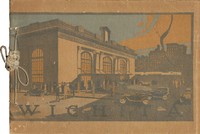
Before opening Wichita — Edition Insights, the edition data offers a quick orientation: 6,685 words, 30 min estimated reading time, and 1 detected text section.
The text analysis averages about 21.1 words per sentence, while the detected sections provide another way to judge how the source is divided.
Project Gutenberg metadata also associates the work with “Wichita (Kan.) -- Pictorial works,” connecting these edition facts with the source record’s subject description.
Explore this collection
These alternatives are selected using recorded categories and estimated reading time.
About 35 minutes
Modern Nations
7,824 recorded words. 5 minutes difference from this book's estimate.
View Gutenberg source #16142About 36 minutes
Modern Nations
8,236 recorded words. 6 minutes difference from this book's estimate.
View Gutenberg source #31888About 22 minutes
Modern Nations
4,849 recorded words. 8 minutes difference from this book's estimate.
View Gutenberg source #54820Search stored excerpts and compare books → Choose by your preferences →
Choices use stored catalog measurements. Estimates vary with reading speed. A shared category is a catalog label, not a claim that two books have the same argument or literary quality.
Search reads excerpt text stored with this catalog and links to its associated Gutenberg record. The connection is stored in the site database; this tool does not recheck that every excerpt is word-for-word identical to that external record. Excerpt search does not cover every chapter and does not verify historical publication dates.
Catalog snapshot checked: 2026-09-26. Coverage: 99 public books, 99 available source excerpts.
Calculated from edition completeness, EPUB availability, text structure and catalogue metadata. Not a user rating.
Total of 100 points, scaled to a 2.5-5.0 range. Editions with an empty description or a missing EPUB file are not scored.
Public-domain source text
The source text is kept in the dedicated reader, separate from this catalogue record and its commentary.
The 1914 booklet Wichita, published by Fred Harvey, opens with the city motto “Watch Wichita Win” and immediately grounds its claims in numbers: population rising from 25,000 in 1900 to over 63,000 by publication, with a confident prediction of 100,000. The text treats Wichita’s location as inevitable—first chosen by Indians, then by cattle traders, then by railroads—and proceeds to inventory the city’s grain markets, jobbing houses, and milling capacity. This is not a neutral description but a deliberate piece of booster literature, where every statistic and photograph is marshaled to prove progress.
The booklet relies heavily on quantitative evidence to construct its argument. Grain cars (14,465 in 1912), stock cars (10,759), flour mill capacity (7,000 barrels daily), and building permits ($7.5 million in one year) are presented as proof of growth. The text notes that Wichita ranked eighth among U.S. cities in new paving area in 1911. These figures are not merely decorative; they form the backbone of the promotional claim that the city is “justifying” its motto. The repetition of precise numbers—200 rooms in the new Travelers’ Hotel, 416 acres of parks, 10,000 volumes in the library—creates a rhythm of accumulation that mirrors the city’s own expansion. The reader is invited to see Wichita as a place where progress can be measured and trusted.
Nearly every building described in Wichita is presented as a monument to civic ambition. The Scottish Rite Temple is “solid stone, four stories,” occupying “one of the most important corners.” The City Library, erected in 1914, uses “dressed Bedford stone” and “most modern library appliances.” The Kansas Masonic Home sits on “fifteen acres of beautiful lawn and woodland.” Even the fire department’s central station is praised for its signal system and gradual motorization. These descriptions serve a dual purpose: they document actual structures, but they also function as visual proof that Wichita is a city of substance. The repeated emphasis on materials—stone, steel, concrete, brick—and costs ($75,000 for the library, $500,000 for the hotel) reinforces the message that Wichita’s growth is solid and permanent.
The booklet devotes considerable space to educational and religious institutions, positioning them as markers of cultural maturity. Friends’ University, Fairmount College, Mount Carmel Academy, and St. John’s School are each given a paragraph. The text notes that Mount Carmel Academy draws students from four states and that every room is “so situated as to receive sunshine.” Fairmount College is described as having “reached a firm foundation after years of struggle.” Four churches are illustrated together, and the Catholic Cathedral’s 1912 dedication is mentioned. These institutions are not incidental; they are part of the same promotional logic as the grain statistics. A city that can support multiple colleges and a cathedral, the booklet implies, is a city that has transcended its frontier origins and achieved permanence.
Wichita is best read as a period artifact—a snapshot of how one city chose to represent itself at a moment of rapid change. The reader should pay attention to what is omitted: labor, conflict, poverty, or any hint of dissent. The booklet’s confidence is itself a historical clue, revealing the values and aspirations of Wichita’s boosters in 1914.
Looking through Wichita — Edition Insights, I kept thinking about how much civic pride rests on numbers, every population figure and railroad line a small prayer for permanence. It reminded me of the quiet insistence in Against Home Rule: The Case for the Union (1912) — Themes and Context, that same longing for structure when the ground feels uncertain. Both books feel like someone pressing a photograph into your hands, saying, See? We were here.
Your answers remain private and are stored only in this browser.